![LOGO-SUNWISE_SOLAR-MADE-SIMPLE-VECTOR-4-2048x857.png]](https://solarguide.sunwiseusa.com/hs-fs/hubfs/LOGO-SUNWISE_SOLAR-MADE-SIMPLE-VECTOR-4-2048x857.png?height=40&name=LOGO-SUNWISE_SOLAR-MADE-SIMPLE-VECTOR-4-2048x857.png)
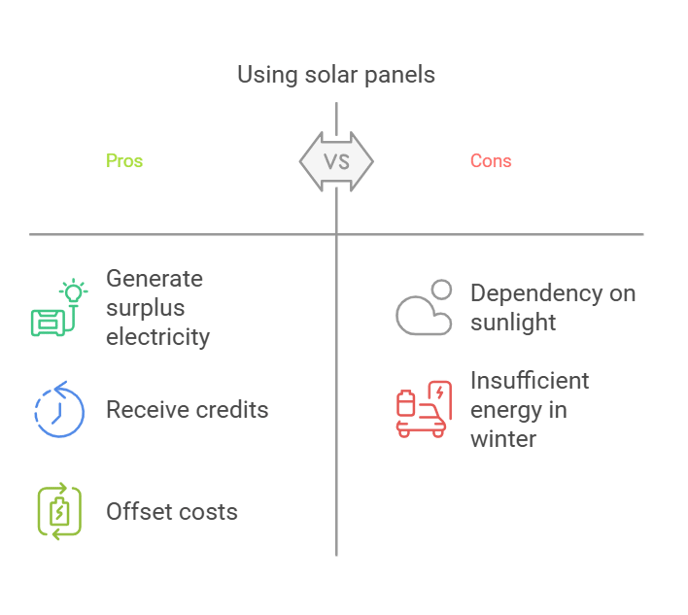
Solar Panels Generate Power:
Your solar panels produce electricity from sunlight. During the daytime, your panels may generate more electricity than your home requires, especially during the sunnier months.
Extra Electricity Goes to the Grid:
Any surplus electricity that your home does not use is sent back to the power grid. This happens most frequently in the spring and summer when the days are longer and sunnier.
Receive Credits:
Your electricity meter tracks the amount of energy you consume from the grid
as well as the surplus energy you supply. When you generate more power
than you use, the meter effectively runs backward, and you earn credits that
will be visible on your electricity bill. These credits are accumulated based on
the amount of excess energy you provide. The credits you earn during the
sunnier months can be used to offset your energy consumption during the fall
and winter when your solar panels may produce less electricity due to shorter
days and less sunlight.
Offset Costs:
At times when your solar panels are not generating enough electricity—such
as during the night, on cloudy days, or in the winter months—you will need to
draw power from the grid. The credits you’ve accumulated from your surplus
energy production during the year help offset the costs of this additional
electricity, reducing your overall energy expenses.