![LOGO-SUNWISE_SOLAR-MADE-SIMPLE-VECTOR-4-2048x857.png]](https://solarguide.sunwiseusa.com/hs-fs/hubfs/LOGO-SUNWISE_SOLAR-MADE-SIMPLE-VECTOR-4-2048x857.png?height=40&name=LOGO-SUNWISE_SOLAR-MADE-SIMPLE-VECTOR-4-2048x857.png)
Installing a solar system is an exciting step towards energy independence and sustainability. However, many homeowners are surprised to learn that their utility bills don’t disappear entirely after going solar to give you a clearer picture of what to expect.
How Does Net Metering Work?
One of the major benefits of going solar is the ability to participate in net metering programs. Here’s how it works:
-
Excess Energy Production: When your solar panels produce more energy than you use, the surplus is sent back to the grid. You receive credits on your utility bill for this excess energy.
-
Energy Deficits: At times when your solar panels aren’t producing enough energy (e.g., at night), you can draw electricity from the grid, using the credits you’ve earned.
Will My Utility Bill Go Away Completely?
No, it won’t. While your solar panels will generate a significant portion of the electricity you use, you’ll likely still have a small monthly connection fee. This fee ensures you remain connected to the utility grid, which provides power at night, during cloudy weather, or when your energy usage exceeds your solar production.
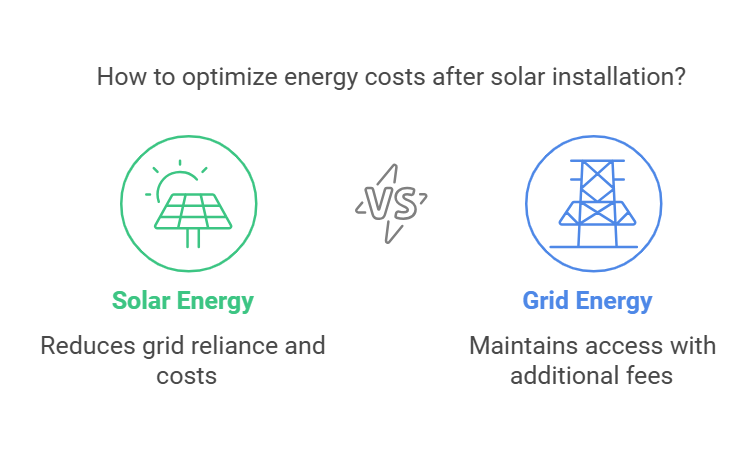
By understanding how solar billing works and leveraging available programs, you can maximize your savings and make the most of your solar investment. While your utility bill may not vanish completely, it will likely shrink to a fraction of what it was, giving you peace of mind and greater control over your energy costs.
Key Stats:
Average Connection Fees: Homeowners typically pay a connection fee of $10 to $20 per month to remain tied to the grid.
Net Metering Savings: Households in states with favorable net metering policies can save an average of $100 to $300 annually by selling excess power back to the grid.
Did You Know?
The average residential electricity rate in the U.S. has increased by 14% over the last five years, making solar a more attractive option.