![LOGO-SUNWISE_SOLAR-MADE-SIMPLE-VECTOR-4-2048x857.png]](https://solarguide.sunwiseusa.com/hs-fs/hubfs/LOGO-SUNWISE_SOLAR-MADE-SIMPLE-VECTOR-4-2048x857.png?height=40&name=LOGO-SUNWISE_SOLAR-MADE-SIMPLE-VECTOR-4-2048x857.png)
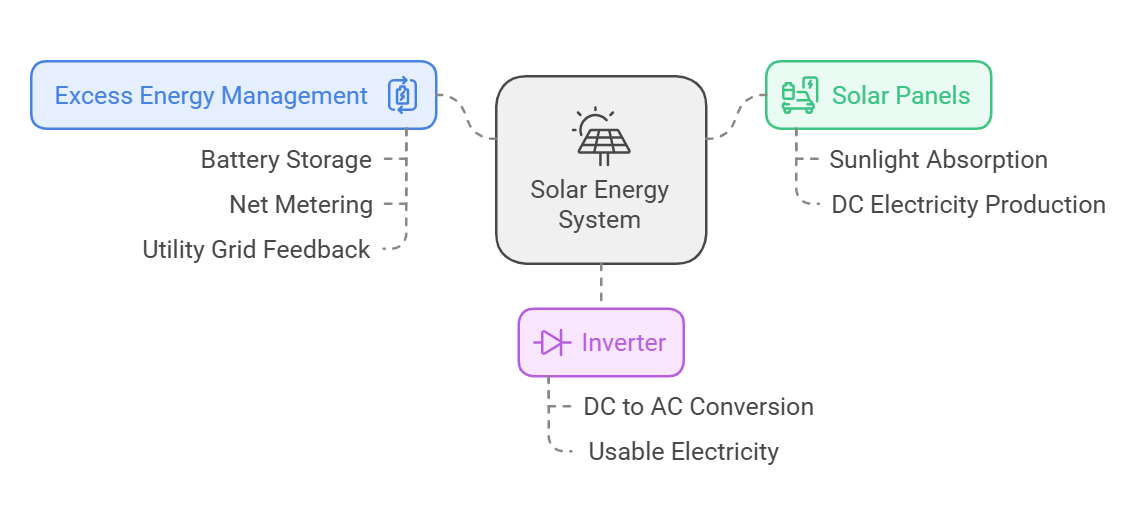
Solar energy is simply power from the sun. When sunlight hits solar panels, the panels absorb it and turn it into electricity. This electricity starts as direct current (DC), but since your home uses alternating current (AC), an inverter converts it into the type of electricity you can use for your appliances, lights, and more.
If your solar panels produce more electricity than your home needs, the extra energy doesn’t go to waste. It can either be stored in a battery for later use or sent back to the utility grid. Many energy providers offer net metering, which gives you credits for the electricity you send back. You can use these credits to reduce your energy bill during times when your system isn’t producing electricity, like at night or on cloudy days.
Solar systems are built to last, with most panels guaranteed for 25 years or more. They require very little maintenance because they have no moving parts, making them reliable and cost-effective in the long run.
Key Stats:
- Solar panels have an average efficiency of 15%–22%, depending on the panel type. (Source: Energy.gov)
- A typical residential solar system reduces carbon emissions by about 3–4 tons annually. (Source: EPA)
Want to learn more? Check out this Solar 101 Guide from the Department of Energy